

Strength Training Over 40: How to Lift Pain-Free
Many adults over 40 hesitate to lift weights due to joint pain, past injuries, or fear of getting hurt . However, avoiding strength training can actually make joint pain worse —because weak muscles don’t properly support your joints .
💡 The key isn’t avoiding movement —it’s choosing the right exercises, using proper form, and making smart modifications to train safely.
In this guide, we’ll cover: ✅ Why strength training is essential for joint health ✅ The most common mistakes that cause joint pain ✅ The best pain-free strength exercises for adults over 40
Why Strength Training is Essential for Joint Health
If you experience knee, back, or shoulder pain , you might assume that lifting weights will make it worse. But research shows that proper strength training can actually reduce joint pain, strengthen connective tissue, and improve mobility ( Fransen et al., 2015 ).
Here’s why:
✅ Stronger Muscles = Less Joint Stress Your muscles act like shock absorbers for your joints. If they’re weak, your joints take more impact , leading to pain and stiffness. Strength training reinforces these muscles, reducing strain on your knees, hips, and shoulders.
✅ Better Mobility & Flexibility Unlike high-impact cardio (like running), controlled strength training improves mobility and flexibility , helping prevent stiffness and injury.
✅ Increases Bone Density & Prevents Osteoporosis Weight-bearing exercises stimulate bone growth , making them crucial for adults over 40 to prevent osteoporosis and fractures .
Common Strength Training Mistakes That Cause Joint Pain
❌ Lifting Too Heavy, Too Soon – Your joints need time to adapt. Start light and gradually increase weights.
❌ Using Poor Form – Bad posture, fast reps, or improper angles can cause unnecessary joint stress . Focus on slow, controlled movements .
❌ Skipping Warm-Ups – Going from zero to lifting weights without proper activation can shock your joints . Always warm up properly before lifting.
❌ Ignoring Recovery – Joint pain often comes from overuse , not just exercise. Give your body time to recover between sessions .
Best Joint-Friendly Strength Training Exercises
💡 The best exercises strengthen muscles while reducing joint strain.
Lower Body: Pain-Free Leg & Hip Exercises
✅ Goblet Squat – Keeps weight in front, reducing knee stress ✅ Romanian Deadlift – Strengthens glutes & hamstrings, protecting the lower back ✅ Step-Ups – Single-leg work improves stability without excessive knee strain ✅ Glute Bridges – Strengthens hips & lower back without pressure on knees
Upper Body: Shoulder & Elbow-Friendly Movements
✅ Landmine Press – Allows natural shoulder movement, reducing impingement risk ✅ Suspension Rows (TRX Rows) – Strengthens back without stressing the shoulders ✅ Neutral Grip Dumbbell Press – Less strain on shoulders than a barbell press ✅ Banded Face Pulls – Strengthens rear delts & posture muscles to reduce shoulder pain
Core & Stability: Protecting the Spine
✅ Suitcase Carries – Strengthens core & grip while improving posture ✅ Dead Bug Exercise – Trains core stability without straining the lower back ✅ Pallof Press – Strengthens core muscles that protect the spine
How to Modify Strength Training for Joint Health
💡 If you experience joint pain, don’t stop training—modify your workouts!
🔹 Lower Impact Variations: Instead of barbell squats, try goblet squats. Instead of push-ups, try incline push-ups.
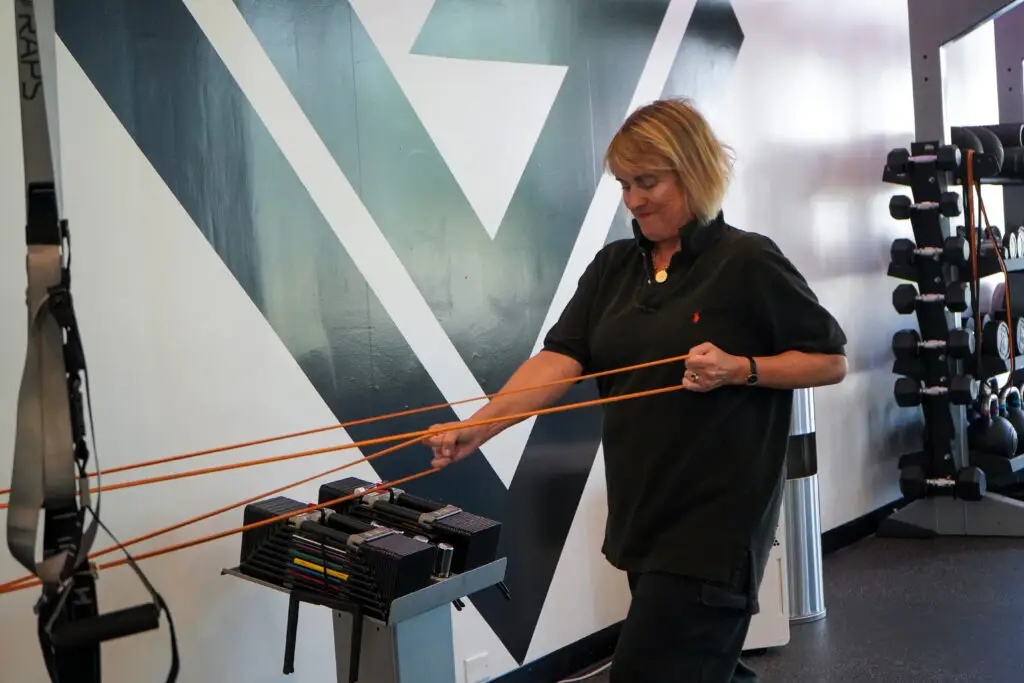
🔹 Use Resistance Bands: Bands reduce joint compression while still building strength.
🔹 Focus on Unilateral Exercises: Single-leg and single-arm exercises improve balance and joint stability.
🔹 Prioritize Recovery: Stretching, mobility work, and proper nutrition help your joints recover faster.
The Bottom Line: Train Smart, Lift Pain-Free
Strength training is one of the best things you can do to improve joint health , as long as you train smart and use the right exercises .
💡 Action Steps for This Week: ✅ Swap high-impact movements for joint-friendly alternatives ✅ Focus on slow, controlled reps with proper form ✅ Strengthen stabilizer muscles with single-leg and core exercises
📍 P.S. Want a personal trainer to build a pain-free strength plan for you? Click here to get started.